Categories
Brood XIX Magicicada Periodical

A Brood XIX Periodical Cicada Primer

Brood XIX (19) will next emerge in 2024.

This page has last updated in 2011.

What are they?

Magicicada is a genus of periodical cicadas known for emerging in massive numbers in 17 or 13-year cycles/periods. The cicadas emerging in 2011 have 13 year life-cycles. Magicicada cicadas are also organized into broods. There are 3 broods of 13-year cicadas, and the brood emerging in 2011 is Brood XIX (nineteen).

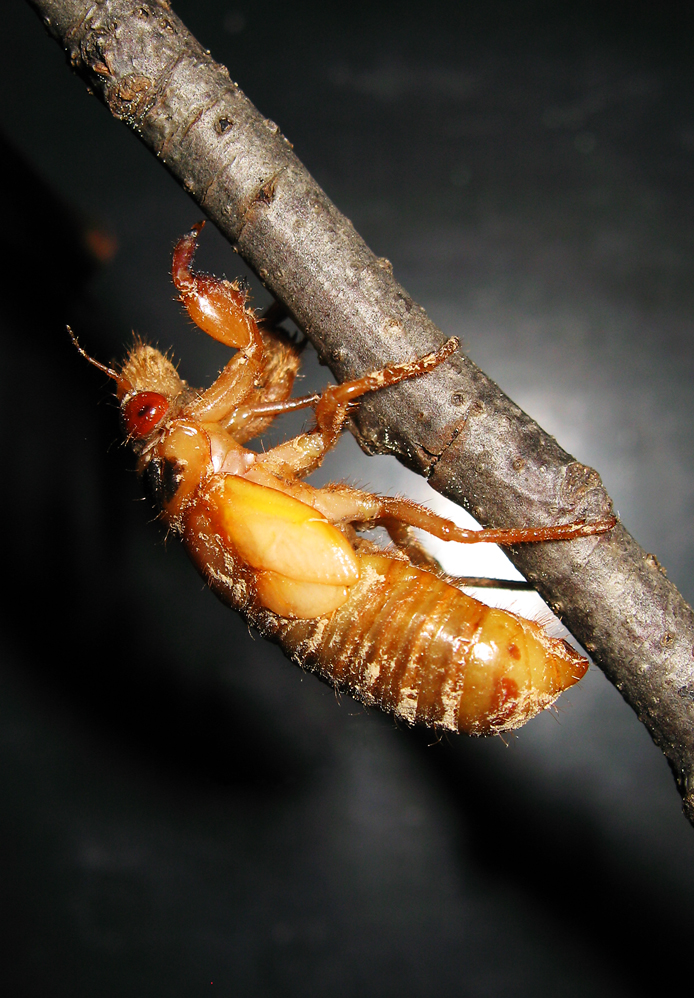
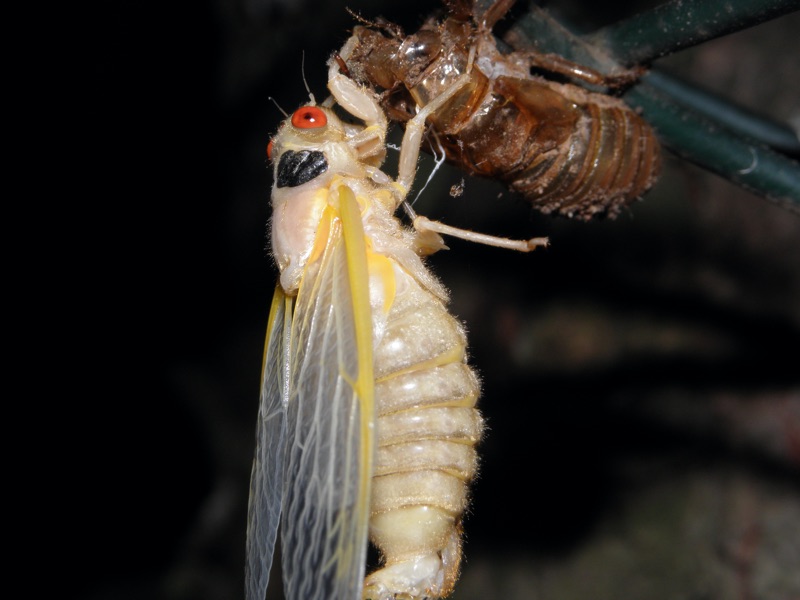
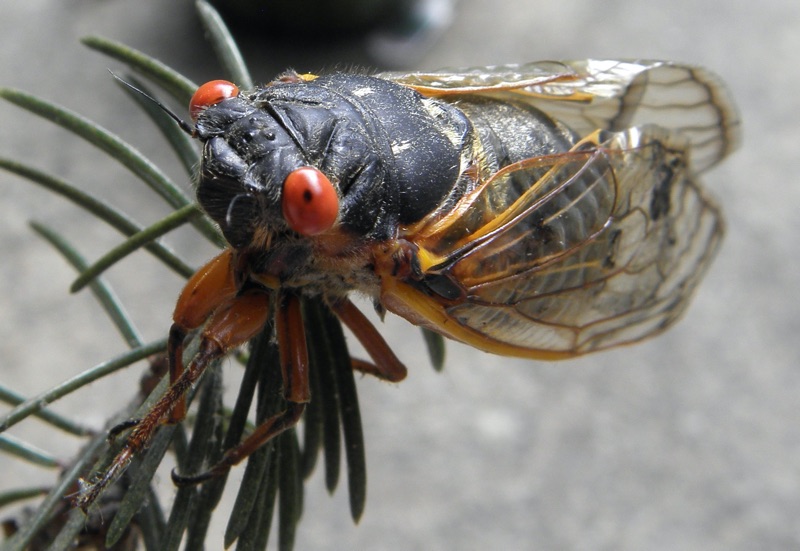
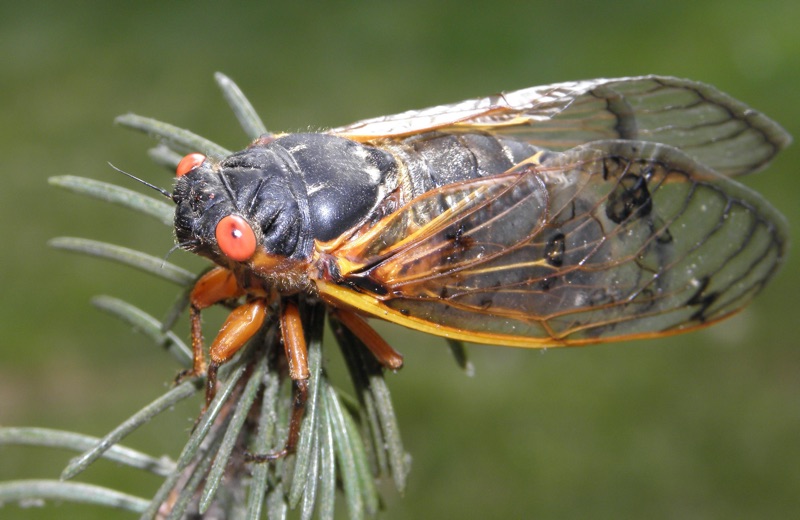
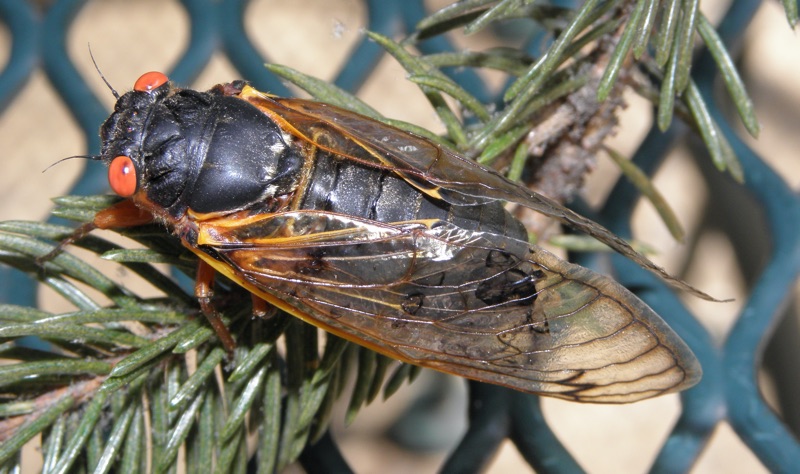
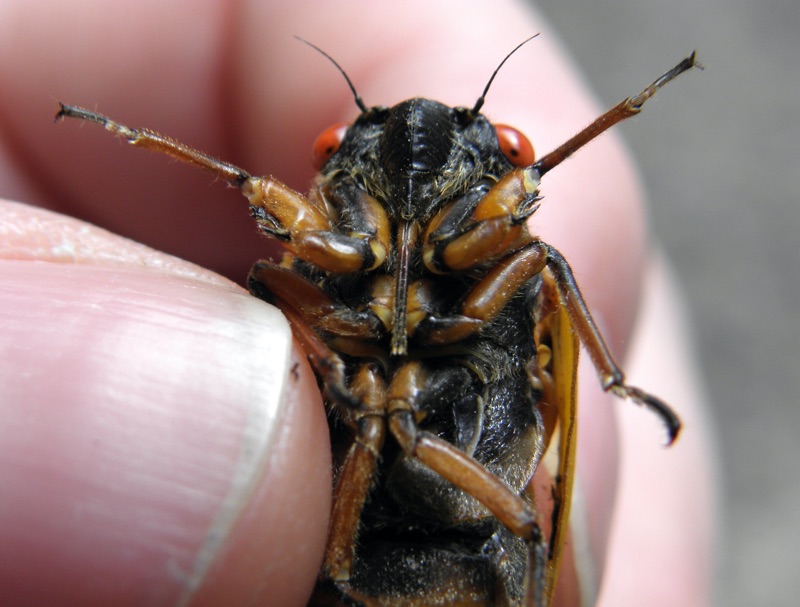
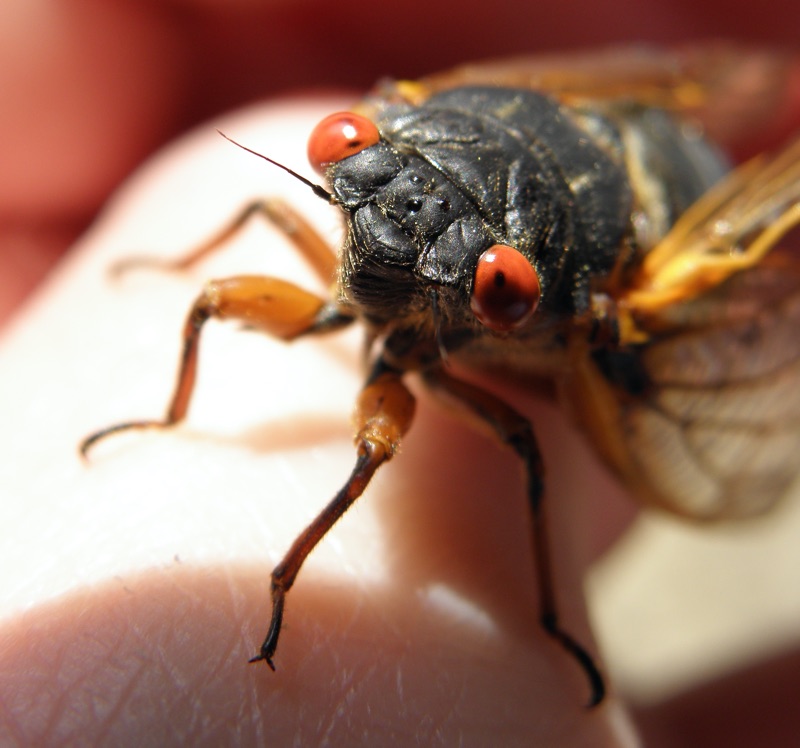
There are 4 species of 13-year Magicicada: M. tredecim, M. neotredecim, M. tredecassini and M. tredecula. The adults of all four species have black bodies with orange markings and red-orange eyes. M. tredecim and M. neotredecim are very similar, and you can only tell them apart by their song in areas where their ranges overlap (or by looking at DNA). They are, however, larger than M. tredecassini and M. tredecula, and have a noticeably different song.

Visit this Cicadas @ UCONN species page for detailed information, including photos and audio.

Here is some video and audio of 17 year Magicicada, which look and sound remarkably similar to the 13 year variety. This will give you an idea of what to expect:

Cicada Mania, best of 2007, part 1 by Dan from Cicada Mania on Vimeo.

Note: some folks call these cicadas “locusts”, but they are not true locusts.

When will they emerge?

The Brood XIX Magicadas will emerge this spring. When they emerge depends on the weather. Generally speaking, once the ground temperature gets to 64º Fahrenheit (18º C) around 8″ (20 cm) deep they will emerge. There’s an emergence formula too. Brood XIX cicadas in Georgia will most likely emerge before the cicadas in Illinois, for example, because Georgia is typically warmer than Illinois.

Where will they emerge?

Historically, Brood XIX has emerged in as many as 14 states. The emergence will cover the most area in Alabama, Arkansas, Illinois, Missouri, and Tennessee. Other states like Georgia, Kentucky, North Carolina, and South Carolina should have strong emergences in limited areas, and states like Indiana, Louisiana, Oklahoma, and Virginia will have very limited emergences.

Important: Magicicadas won’t emerge everywhere you see on the map below. They might not exist in your town or neighborhood (particularly if there’s lots of new construction, which removes trees). The key to seeing them if they don’t emerge in your neighborhood is communication: networking with friends and family, checking the interactive maps on magicicada.org, checking sites like Twitter, Facebook, and YouTube.
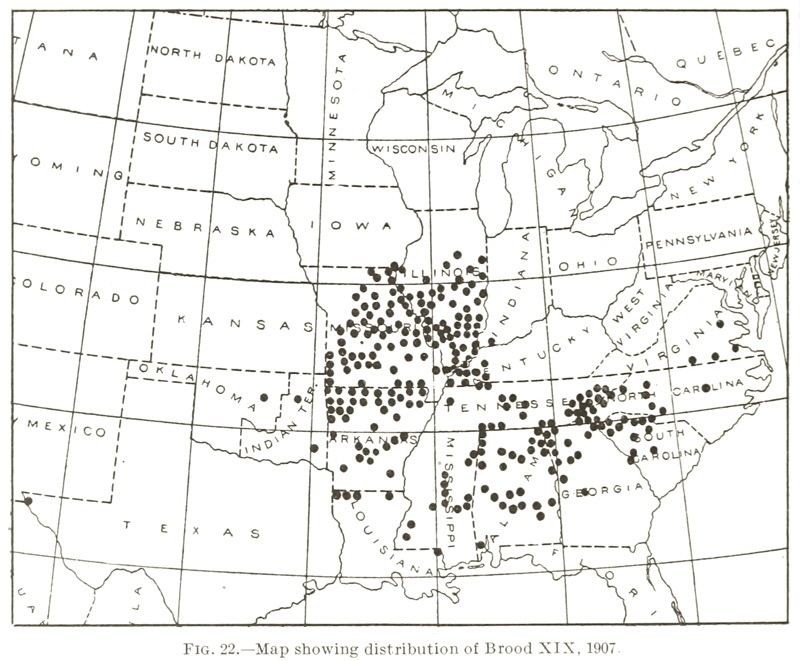
Marlatt 1907 19 Brood XIX
1907 map from Marlatt, C.L.. 1907. The periodical cicada. Washington, D.C. : U.S. Dept. of Agriculture, Bureau of Entomology.

States:

  1. mid to northern Alabama
  2. Arkansas
  3. northern Georgia
  4. mid to southern Illinois
  5. south-western Indiana
  6. west Kentucky
  7. northern Louisiana
  8. Missouri
  9. mid to northern Mississippi
  10. North Carolina
  11. western Oklahoma
  12. north-west South Carolina
  13. Tennessee
  14. random places in Virginia

Why?

Why do Magicadas wait 13 years and why do they emerge in such large numbers? There are many theories why, but the primary reason could be that they’re trying to beat the predators. Since they emerge only once every 13 years, no species can anticipate their emergence (except man), and emerging in large numbers ensures that at least some of them will survive to reproduce.

Who?

People have many reactions to Magicicada including: fear, disgust, panic, mild curiosity, fascination, and fanaticism. We hope that YOU will find them fascinating, and get involved by helping to map the emergence, upload your cicada photos and videos to sites like YouTube and Flickr, and participate in discussions on Twitter and discussion forums.

More information:

Categories
Brood XIX Lenny Lampel Magicicada

Mecklenburg County Brood XIX Magicicada Monitoring Project

Brood XIX 13 year cicadas will be emerging this year in the USA, and folks are already making plans for the emergence.

Lenny Lampel, Natural Resources Coordinator for the Mecklenburg County Park and Recreation Conservation Science Office in Charlotte, North Carolina, is organizing a “Cicada Watch” / Brood XIX Magicicada Monitoring Project. Read an article about Cicada Watch in the Charlotte Observer: Cicadas return – and you can make it count.

If you live in the Mechlenburg County area, and are interested in participating in Cicada Watch, here is more information:

Cicada Watch
Mecklenburg County Brood XIX Magicicada Monitoring Project

Brood XIX, a 13-year brood (or year-class) of periodical cicadas, is set to emerge in 2011. Known as the “Great Southern Brood”, this emergence of cicadas is expected to appear in portions of 15 states. In North Carolina, the cicadas should emerge across much of the piedmont region, including the greater Charlotte
area.

Periodical cicadas appear to be declining in parts of their range throughout the eastern United States, and some broods are now thought to be extinct. Impacts such as development, habitat changes and climatological factors may be contributing to these declines.

Mecklenburg County Park and Recreation’s Division of Nature Preserves and Natural Resources will be collecting data on the emergence of Brood XIX in Mecklenburg County in the Spring of 2011. The help of volunteers and local residents is needed to obtain baseline data on emergence locations and areas of activity within the county. Some of these areas will be monitored throughout the emergence period and can be re-visited in future emergence years to determine whether or not local populations are stable. Data collected during this Cicada Watch will help us to understand the status and future of Brood XIX in Mecklenburg
County.

Volunteers Needed!

Cicada Watch volunteers can assist in any of the following activities:

1. Observe their property and neighborhood for periodical cicada activity and report findings to staff
2. Survey areas of the county where emergences may be expected
3. Collect routine monitoring data from active locations throughout the emergence period
4. Follow up on leads of periodical cicada activity, such as reports of exit holes, emerging nymphs, shed skins, or active adults

For more information or to sign up as a volunteer, please contact :
Lenny Lampel, Natural Resources Coordinator
Phone #: 704-432-1390 E-mail: lenny.lampel@mecklenburgcountync.gov

Categories
Brood IV

Magicicada in Kansas

Paul Stubbs wrote us to let us know that periodical cicada stragglers are emerging early in Kansas. Based on the locations and date (1998), it sounds like these are Brood IV emerging 5 years early. Very interesting.

Hi, just wanted to inform you that periodicals are emerging in northeastern Kansas as well. I live in Osawatomie, KS and have heard a few here. I have heard and seen them in Paola, KS at my parents home. Our last big event was in ’98 so these many stragglers are fairly impressive.
We are located approximately 30 miles south of Kansas City. And BTW, thanks for a great website for cicada fans!!

Respectfully,
Paul Stubbs

brood iv

Categories
Brood III Brood XIX

Brood III or Brood XIX

Here’s the old maps (from C.L. Marlatt’s The Periodical Cicada from 1907) for Brood III or Brood XIX. Brood III is a 17-year Magicicada due to emerge in 2014, and Brood XIX is a 13-year Magicicada due to emerge in 2011. It looks like stragglers (periodical cicadas emerging years in advance of when they’re supposed to emerge) in Iowa would be Brood III, and those emerging in Missouri are probably Brood XIX, and possibly Brood III in the north of Missouri. If you find some, take photos, video of their song, etc.

Over the past 100+ years, these maps have been updated, and you can find the updated maps on sites like magicicada.org or Cicada Central.

Brood III

Brood XIX

Categories
Brood III Gene Kritsky Magicicada

Brood III cicadas are emerging too!

Gene Kritsky wrote us to let us know that Brood III periodical cicadas are emerging in Iowa and Missouri.

Dan,

I wanted to let you know that I have received emails with reports of
emerging periodical cicadas in Iowa and northern Missouri in Brood III
territory. These cicadas would be emerging four years early similar to
the early emergences observed in 2000, 2003, 2004, and 2009.

Cheers,
Gene

It’s been an interesting year so far, with Brood III stragglers emerging 4 years early, Brood XIV emerging 2 years late, and Brood XIX emerging 1 year early.

Check our Brood Chart to see where the next batch of periodical cicadas might emerge.

Check Cicadas @ UCONN for maps.

Categories
Brood XIV Periodical Stragglers Roy Troutman

Brood XIV Straggler in Ohio

Roy Troutman found this Brood XIV Magicicada straggler in the Cincinnati Ohio area this weekend. This cicada emerged 2 years after it should have. Amazing.

Brood XIV Straggler

Categories
Audio, Sounds, Songs Brood XIX Lenny Lampel Magicicada Periodical Video

Magicicada tredecassini audio from Charlotte, North Carolina

Update: Brood XIX straggler photos by Lenny Lampel.

Here’s a treat. Lenny Lampel, Natural Resources Coordinator for Mecklenburg County Park and Recreation Conservation Science Office in Charlotte, NC, uploaded these videos that feature the calls of Magicicada tredecassini to YouTube.

Magicicada tredecassini chorus:

A small chorus of one year early Magicicada tredecassini stragglers of Brood XIX calling from the Lower McAlpine Greenway in Charlotte, North Carolina on May 10, 2010.

Magicicada tredecassini calls :

One year early Magicicada tredecassini stragglers of Brood XIX calling from the Lower McAlpine Greenway in Charlotte, North Carolina on May 10, 2010.

Categories
Brood II Magicicada Pop Culture

Magicicada photos from Sandy Aiello

Sandy Aiello was kind enough to let us post some of her Magicicada photos on Cicadamania:

Magicicada photos from Sandy Aiello

Magicicada photo from Sandy Aiello

Categories
Brood II Magicicada Periodical Stragglers

Magicicada septendecim photos

On Monday (Memorial Day) I was lucky enough to find a lone Magicicada septendecim brood II straggler in Metuchen, NJ. This is a male, and he was about 1.5 inches or 3.8 centimeters long.

Molted Male Magicicada septendecim

Male Magicicada septendecim

Male Magicicada septendecim

Male Magicicada septendecim

Male Magicicada septendecim

Male Magicicada septendecim

Look for orange coloring between the wing and eye to identify Magicicada septendecim:
Magicicada septendecim

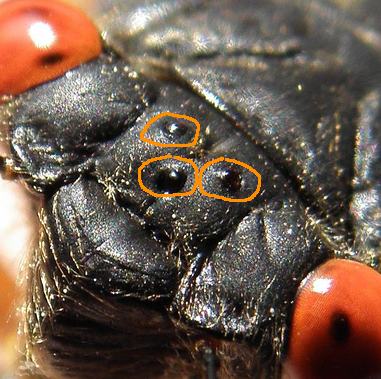
Cicadas have 3 tiny eyes called ocelli:
ocelli

Thanks to Elias for noticing the coloration behind the eye that IDs this as a decim.

Categories
Brood II Brood XIV Magicicada

Brood II Emerging in New Jersey and New York

According to messages left on this site, as well as the magicicada.org map, Brood II cicadas have emerged in New Jersey and New York. I’m in New Jersey, and I plan on looking for cicadas this weekend.

So far:

Brood II stragglers are emerging (4 years ahead of schedule) in North Carolina, Virginia, Maryland, New Jersey and New York.

Brood XIV stragglers are emerging (1 year after they’re supposed to) in Ohio.

Update:

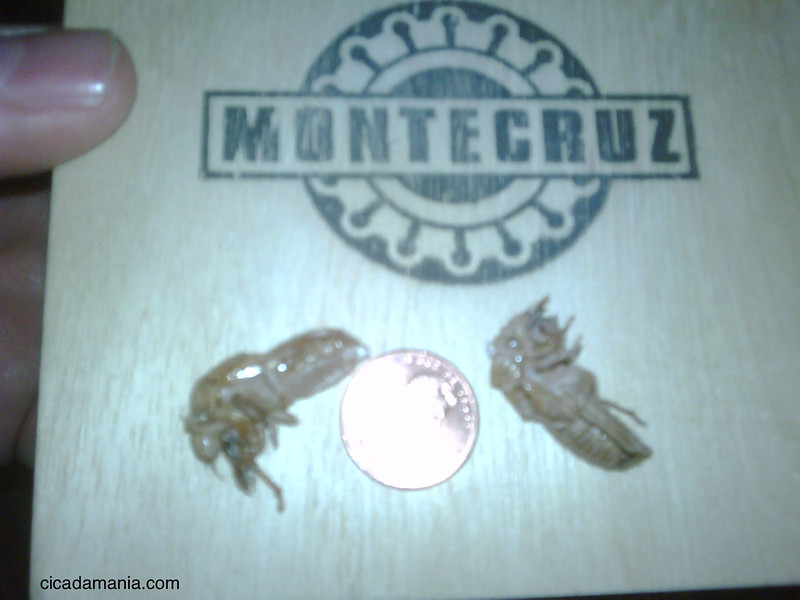
I found some skins in Metuchen, NJ tonight. Apologies for the quality of the photo — I only had my cell phone with me (cell phones were not good in 2008).

Brood II stragglers